
Designed To Protect
Specialist Fire Detection & Suppression for Lithium-Ion Battery Energy Storage Systems (BESS)
Lithium-ion battery energy storage systems (BESS) are being deployed at scale across South Africa, from commercial solar-plus-storage installations and industrial UPS systems to grid-scale renewable energy projects and EV charging infrastructure.
While lithium-ion technology delivers unmatched energy density and efficiency, it also presents a uniquely dangerous fire risk: thermal runaway. Unlike conventional fires, lithium-ion thermal runaway generates its own oxygen internally, meaning it cannot be suppressed by simply removing oxygen from the environment.
It also propagates cell-to-cell at extreme speed, producing toxic off-gases and intense heat that can re-ignite hours after an apparent suppression. Standard fire protection systems are not designed for these risks.
Morimi Fire Solutions designs and installs specialist lithium-ion battery fire protection systems tailored to the specific risks of BESS environments.
Our solutions combine early off-gas detection, thermal monitoring, advanced gaseous suppression, and building safety integration, providing layered protection from the first signs of cell degradation through to active fire suppression.
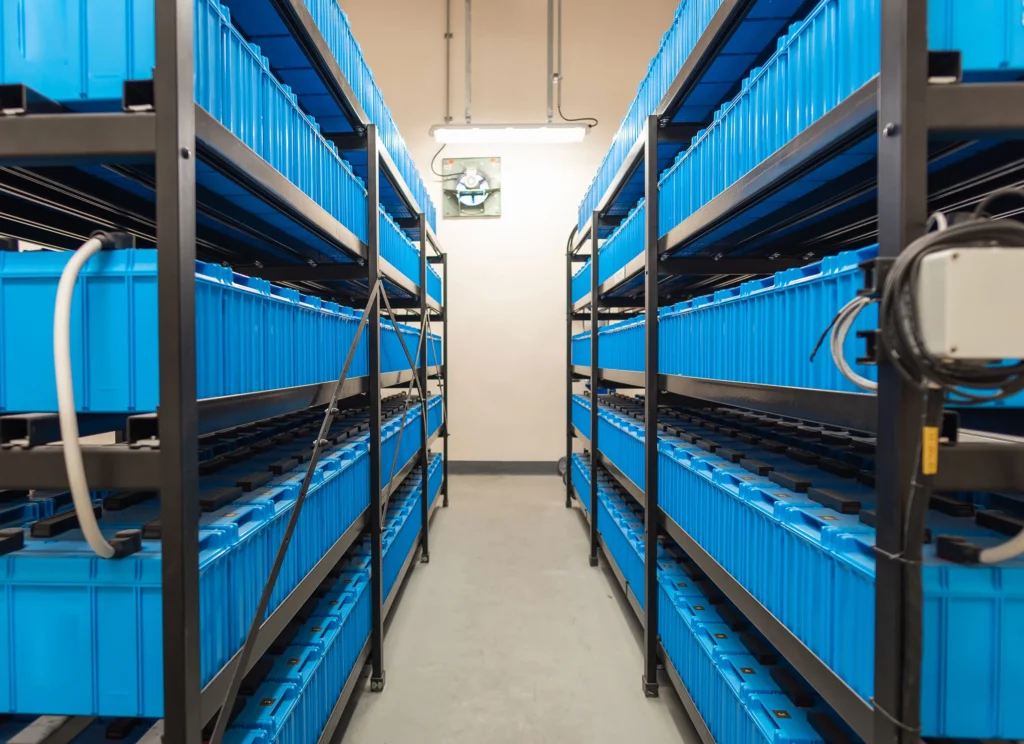
Protect Lithium-Ion Installations
How We Protect Lithium-Ion Battery Installations Across Gauteng
Morimi Fire designs and installs customised fire protection solutions that address the complex risks associated with lithium-ion battery systems. Our solutions integrate advanced detection technologies with specialised fire suppression systems to deliver reliable and compliant protection.
Our services include:

Fire Risk Assessments & Compliance Consulting
Lithium-Ion Fire Risk Assessments SANS-aligned fire risk assessments specific to battery chemistry, installation format (rack, cabinet, containerised), and occupancy profile.

Design & Installation Of Early Detection Systems
Early Off-Gas & Thermal Detection Early warning systems that detect hydrogen fluoride, CO, and thermal anomalies before thermal runaway propagates, critical minutes before a visible fire develops.

Advanced Gaseous Fire Suppression Solutions
Advanced Gaseous Suppression Systems Clean agent and inert gas suppression integrated with battery management system (BMS) signals for automatic response, minimising cell damage and secondary ignition risk.

System Integration With Building Safety Infrastructure
BMS & Building Safety Integration Full integration with your battery management system, HVAC shutdown controls, access control, and addressable fire alarm panel for coordinated emergency response.

Ongoing Maintenance & System Testing
Ongoing Maintenance & Compliance Testing Scheduled maintenance programmes covering detector calibration, suppression system inspection, integrity testing, and SANS 14520 re-certification.
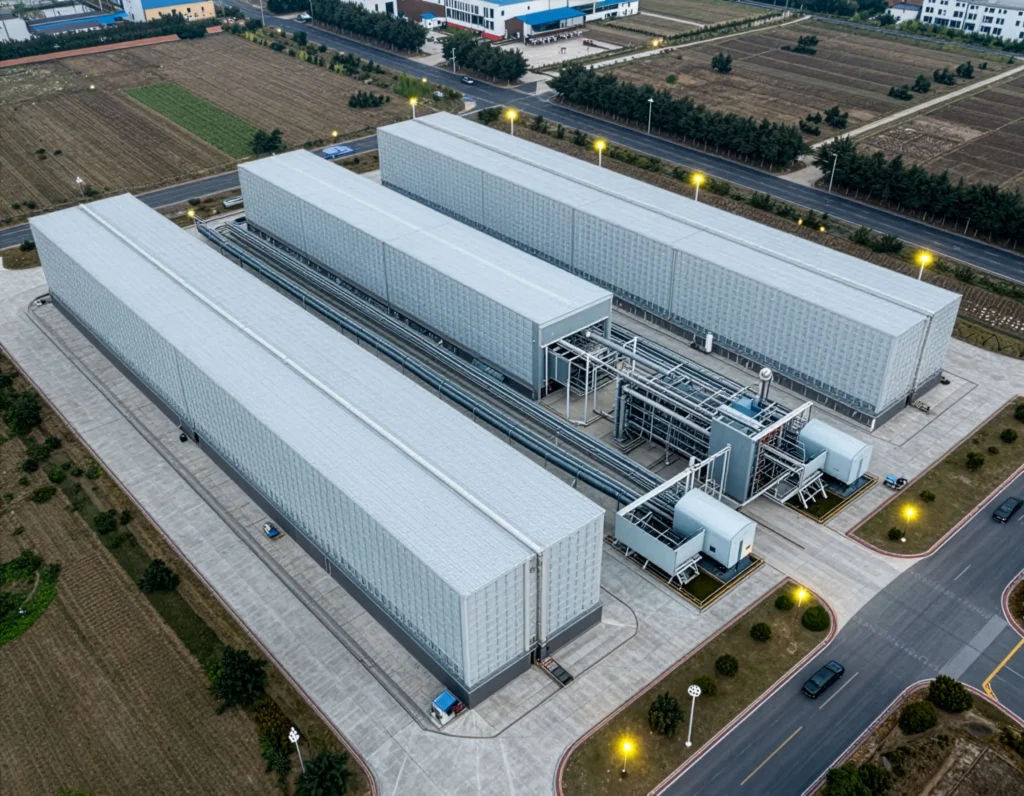
What Makes Them Different
Lithium-Ion Battery Fire Risks
Thermal Runaway
Lithium-ion fires are notorious for re-igniting hours or even days after an initial suppression event, as residual electrochemical energy in undamaged cells continues to generate heat. Any fire protection strategy for BESS must account for extended monitoring and staged suppression response, not just initial knockdown.
Toxic Off-Gas
Before visible fire develops, degrading lithium-ion cells emit detectable off-gases including carbon monoxide (CO), hydrogen (H₂), and in advanced degradation, hydrogen fluoride (HF). Early detection of these gases is critical to enabling pre-fire intervention and safe evacuation of personnel.
Re-ignition Risk
Thermal runaway is the primary fire hazard in lithium-ion batteries. It occurs when internal heat generation exceeds the battery’s ability to dissipate heat, triggering a self-sustaining exothermic reaction that produces extreme temperatures (up to 900°C), flammable gases, and toxic fumes including hydrogen fluoride. A single cell event can cascade across an entire battery pack within seconds.
Applications We Protect Across Gauteng
- Commercial and industrial solar-plus-storage BESS installations
- Grid-scale battery energy storage facilities
- Data centre and critical infrastructure UPS battery rooms
- EV charging hub battery buffer storage
- Telecoms and broadcasting backup power battery banks
- Mining and industrial off-grid energy storage systems
Lithium-ion battery fire protection typically integrates gas suppression as its primary active suppression layer.
See our pages on Low Pressure Clean Agent Systems (FM-200 & Novec 1230) and High Pressure Inert Gas Suppression (IG-55 & IG-541) for details on the suppression agents we use, and Integrity Testing for information on enclosure certification requirements.
FAQ
Frequently Asked Questions – Lithium-Ion Battery Fire Protection
Standard gaseous suppression systems work by reducing oxygen levels or interrupting the chemical chain reaction of combustion. Lithium-ion thermal runaway generates its own oxygen internally through chemical decomposition of the cathode material, meaning oxygen-based suppression strategies are significantly less effective. Thermal runaway also re-ignites after apparent suppression. Effective lithium-ion fire protection requires early off-gas detection, battery-specific suppression design, and extended post-event monitoring.
Thermal runaway is a self-accelerating exothermic reaction inside a lithium-ion cell triggered by overcharging, physical damage, manufacturing defects, or external heat. Early detection relies on monitoring for off-gases — particularly CO, H₂, and HF, which are released by degrading cells before any temperature spike is measurable. Morimi Fire integrates multi-gas detectors and thermal imaging sensors into BESS protection systems to provide the earliest possible warning.
The optimal suppression strategy depends on the BESS format, installation size, and ventilation conditions. Morimi Fire typically designs systems using clean agent suppression (Novec 1230 or FM-200) or inert gas agents (IG-55/IG-541) for enclosed battery rooms and cabinets, combined with in-rack or in-cabinet detection and a coordinated BMS shutdown sequence. We assess each installation individually and design to SANS 14520 and relevant IEC standards.
Yes. Morimi Fire Solutions designs and installs fire protection for containerised battery energy storage systems as well as building-integrated BESS. Containerised systems require specific attention to ventilation management, off-gas extraction, and suppression agent selection, all of which our team accounts for in the design phase.
South Africa does not yet have a dedicated SANS standard specific to lithium-ion battery fire protection, but SANS 14520 (gaseous suppression systems), SANS 10139 (fire detection), and international standards including IEC 62619 (safety requirements for secondary lithium cells) and NFPA 855 (energy storage systems) provide the applicable framework. Morimi Fire designs all lithium-ion protection systems to meet these standards and any specific insurer or authority requirements.
Get hold of us
Contact Us
Need a SAQCC-registered fire suppression specialist in Gauteng? Morimi Fire Solutions provides free site assessments, custom system design, professional installation, and ongoing maintenance across Johannesburg, Pretoria, Germiston, and surrounding areas.
Contact us today to request a quote or schedule a fire risk assessment.
79 Watt Street, Meadowdale, Germiston, Gauteng, South Africa